
Fuel injectors testing and cleaning
The topic of fuel-injector cleaning has been discussed many times in automotive magazines and across internet forums. Despite this, the same questions continue to arise. Most debates focus on cleaning methods, yet nearly everyone agrees on one thing: periodic injector cleaning is essential.
This article was prepared by our customer Oleg, who generously shared his experience. He purchased a Reanimator device and built his own test bench.
Signs of clogged injectors, how often clean them and what impact does it have?
If the injectors are clogged, a cold engine may not start on the first try, especially in winter. During the first few seconds after starting, misfires in one or two cylinders are heard—the engine is misfiring. If you press the accelerator pedal sharply, a "drop" in power is felt before the engine revs up; the engine may stall.
After warming up, the engine runs normally at idle, but during driving, especially when accelerating, a decrease in throttle response is observed (a noticeable loss of engine power).
Injector contamination is usually associated with carbon deposits deposited on the internal surfaces of the fuel system. The severity of deposits is primarily related to the chemical composition of the fuel and temperature fluctuations. Injectors can become clogged not only with high mileage, but also with prolonged idle time and when running a vehicle on natural gas for extended periods.
It is recommended to check injectors after 60000–80000 kilometers. The higher the vehicle's mileage, the shorter the recommended interval between cleanings.
Dirty injectors reduce their flow rate, but they rarely become clogged uniformly. In many cases, there is a significant variation in injector performance across cylinders. As a result, the composition of the air-fuel mixture burned in the engine cylinders begins to vary significantly. Furthermore, the color of deposits on spark plug insulators varies, even if the spark plugs are the same brand.
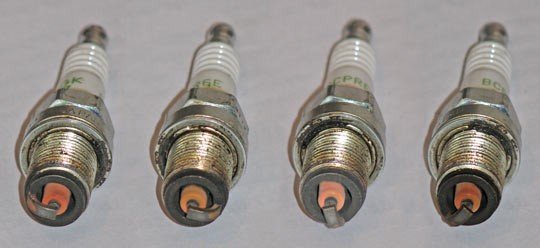
Different colors of deposits on the spark plug insulators on the combustion chamber side may serve as an additional sign of uneven fuel injection.
A preliminary assessment of the condition of fuel injectors without removing them from the engine can be performed using the CSS script.
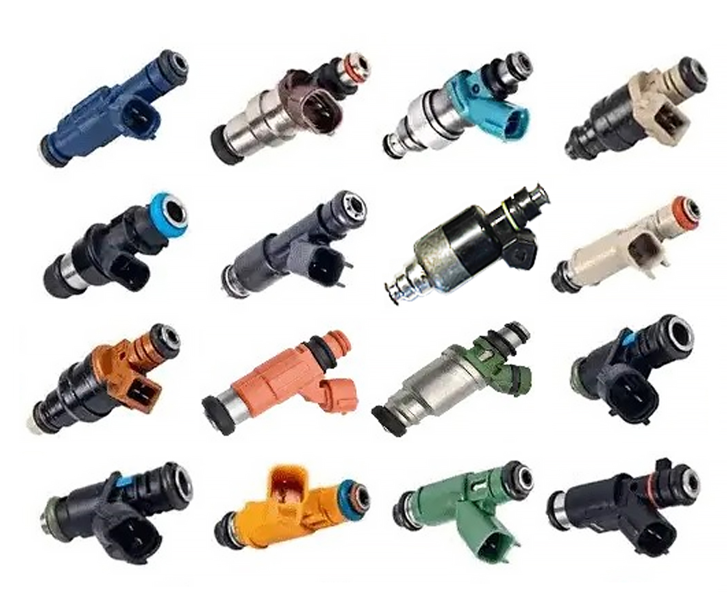
Fuel injectors
Almost all modern internal combustion engines are equipped with an electronic fuel injection system.
These include Multi-Point Injection (MPI) and Gasoline Direct Injection (GDI) / Fuel Stratified Injection (FSI) fuel injection systems.
Let's examine several MPI fuel injection system injectors and their condition after some time in operation.
We use an electron microscope to assess their condition.
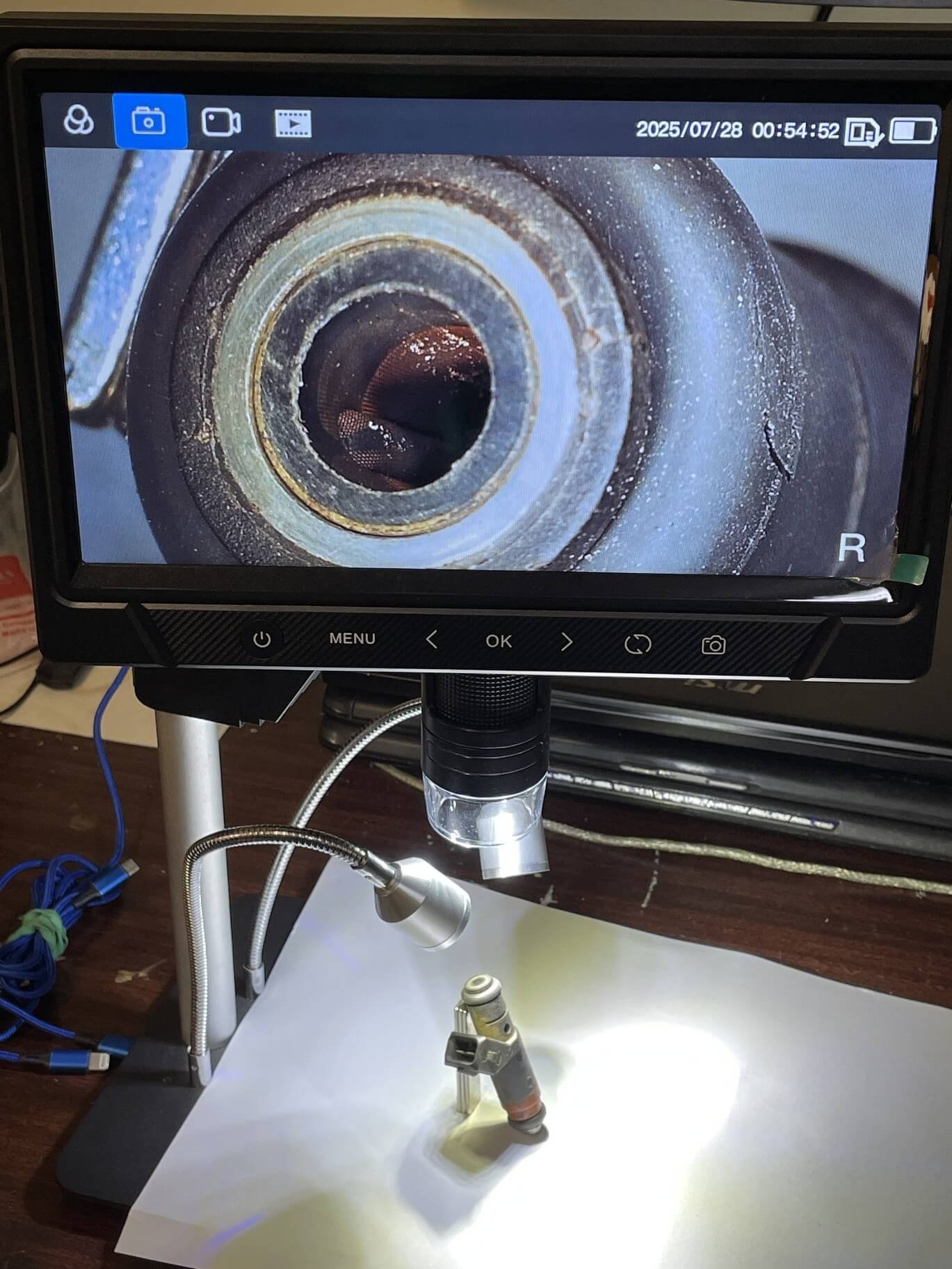
The filter's condition is visible under a microscope.
The rubber seal is torn and needs to be replaced.
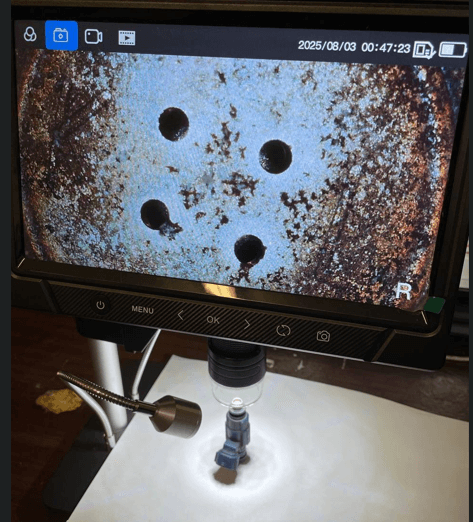
This is what an injector nozzle (spray head) looks like under a microscope.
We can see the dirt that will interfere with fuel atomization and distort the fuel spray pattern.
Fuel injectors before and after cleaning
Bottom view on injector spray patterns:
Before cleaning
After cleaning
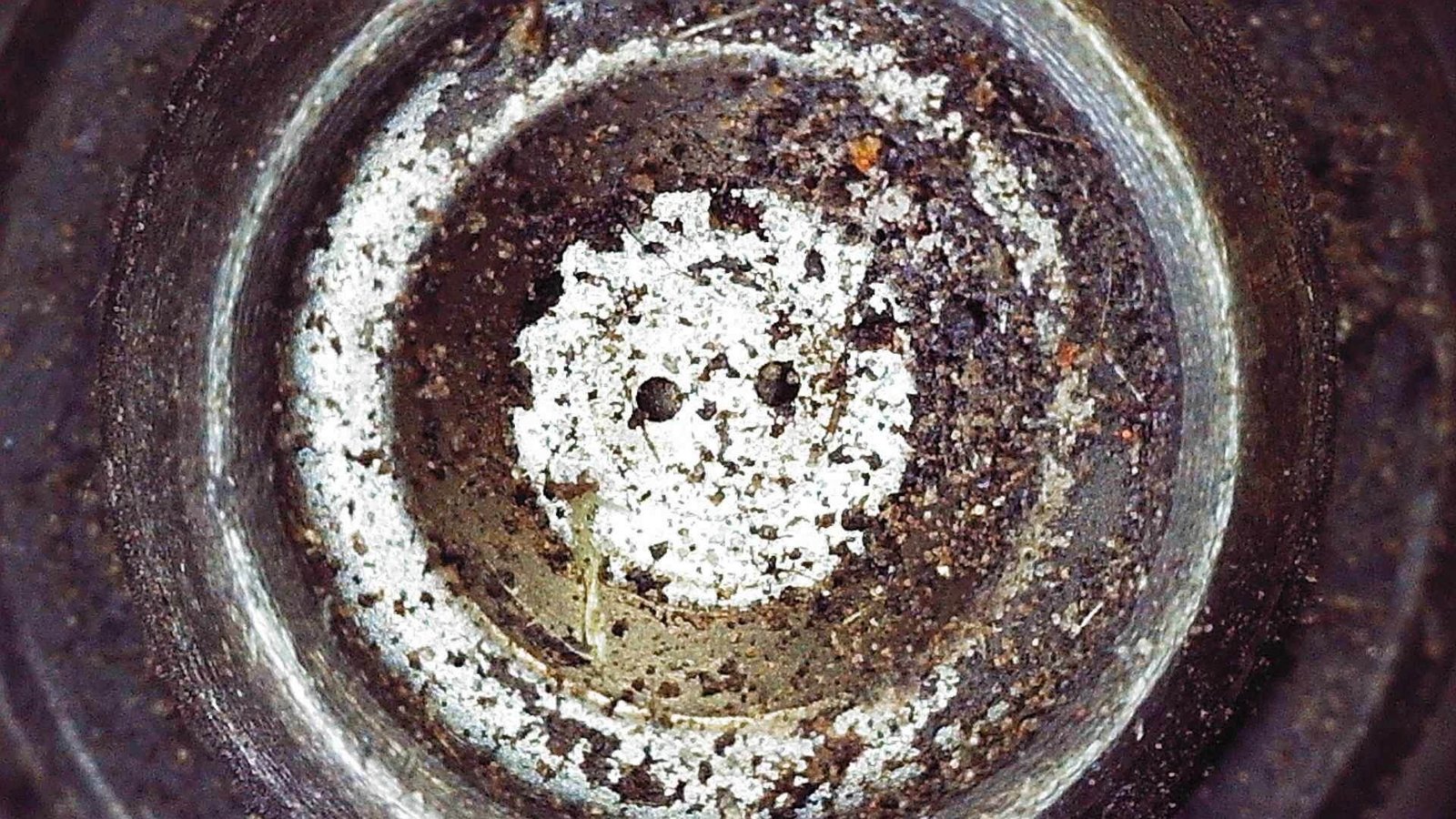
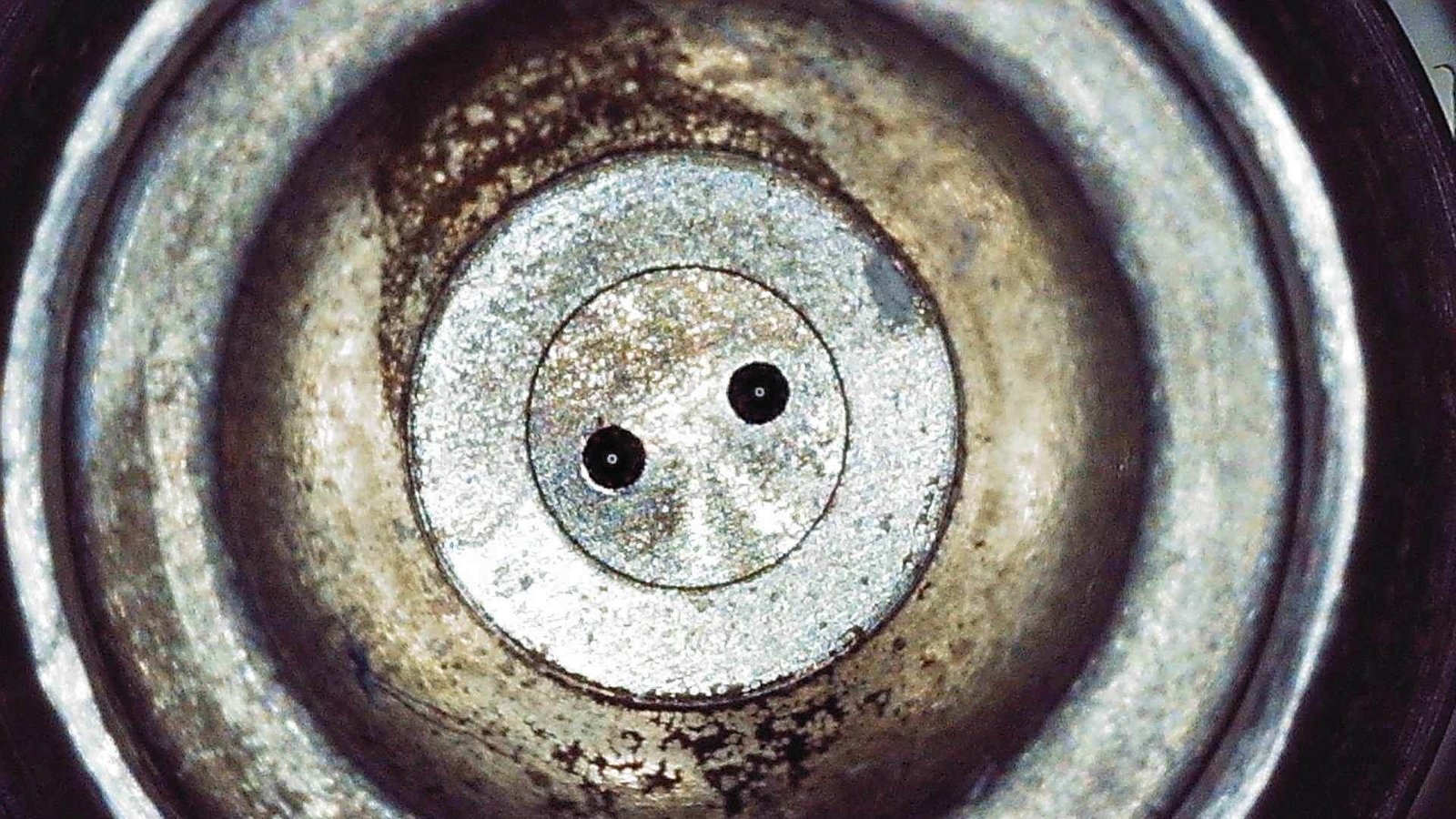
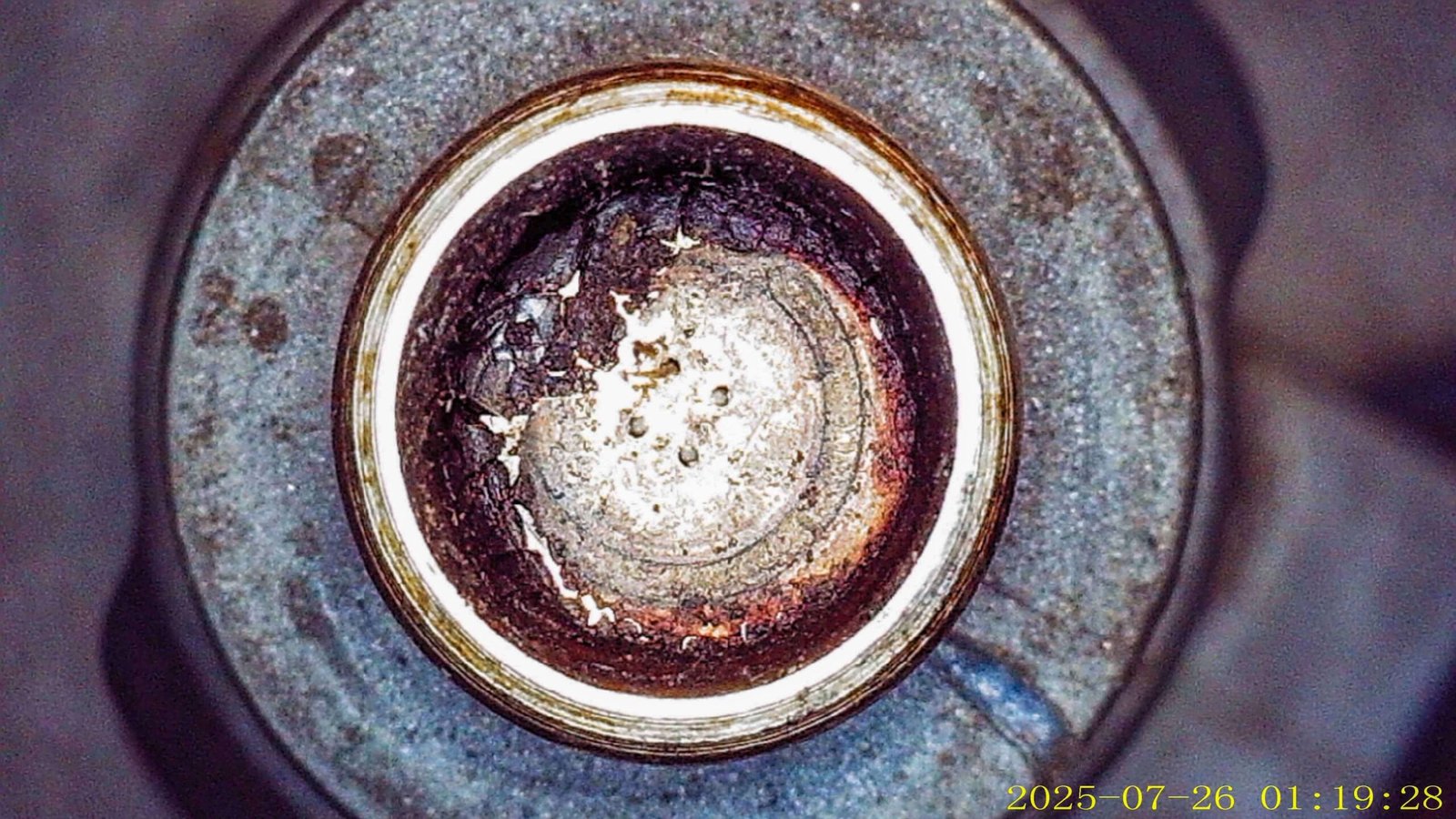
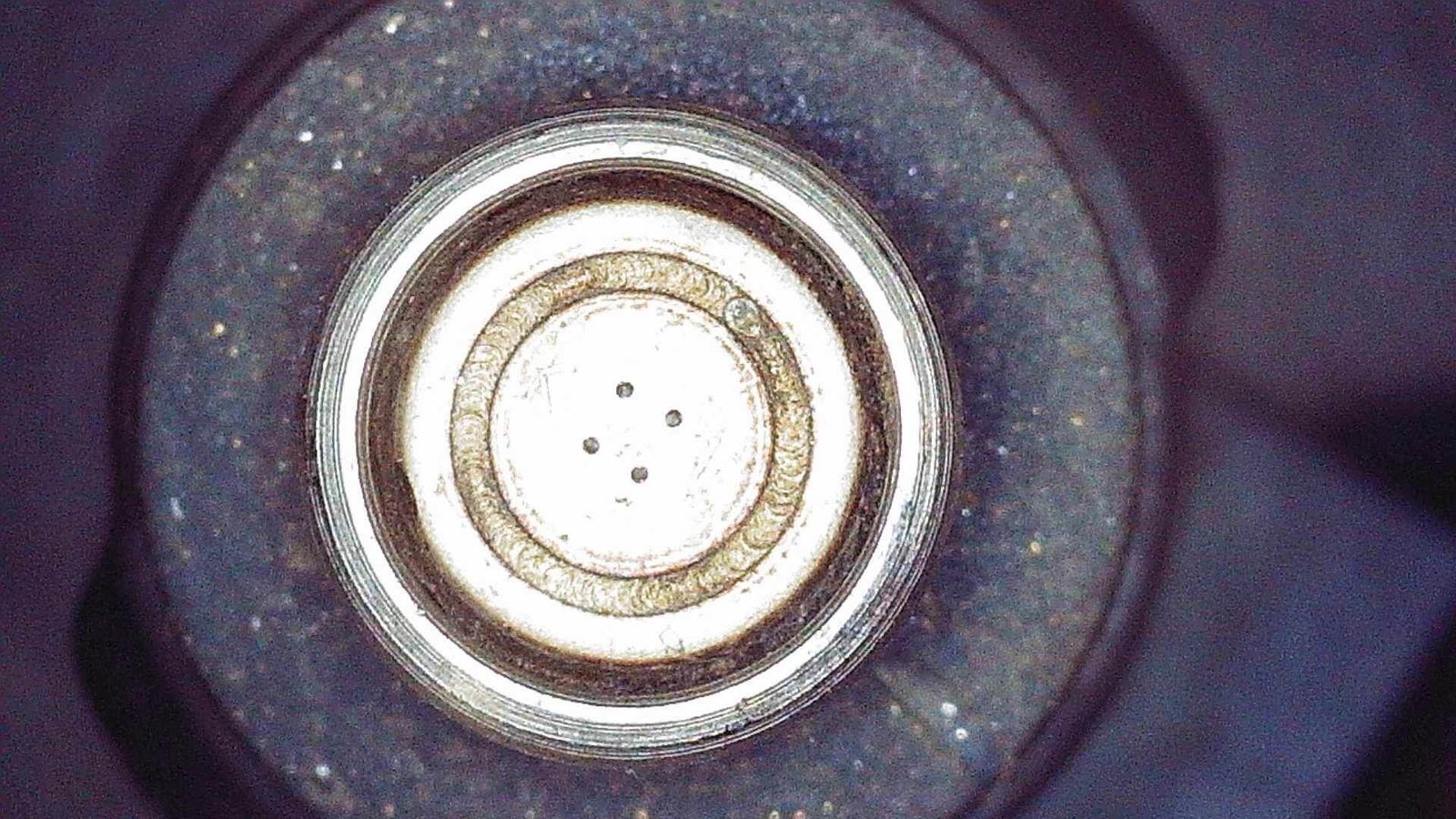
A lot of dirt and various deposits are visible. Cleaning can be done with an ultrasonic cleaner.
Let's try testing the injector performance on a simple homemade test bench using the Injector Reanimator device.
Injector Reanimator
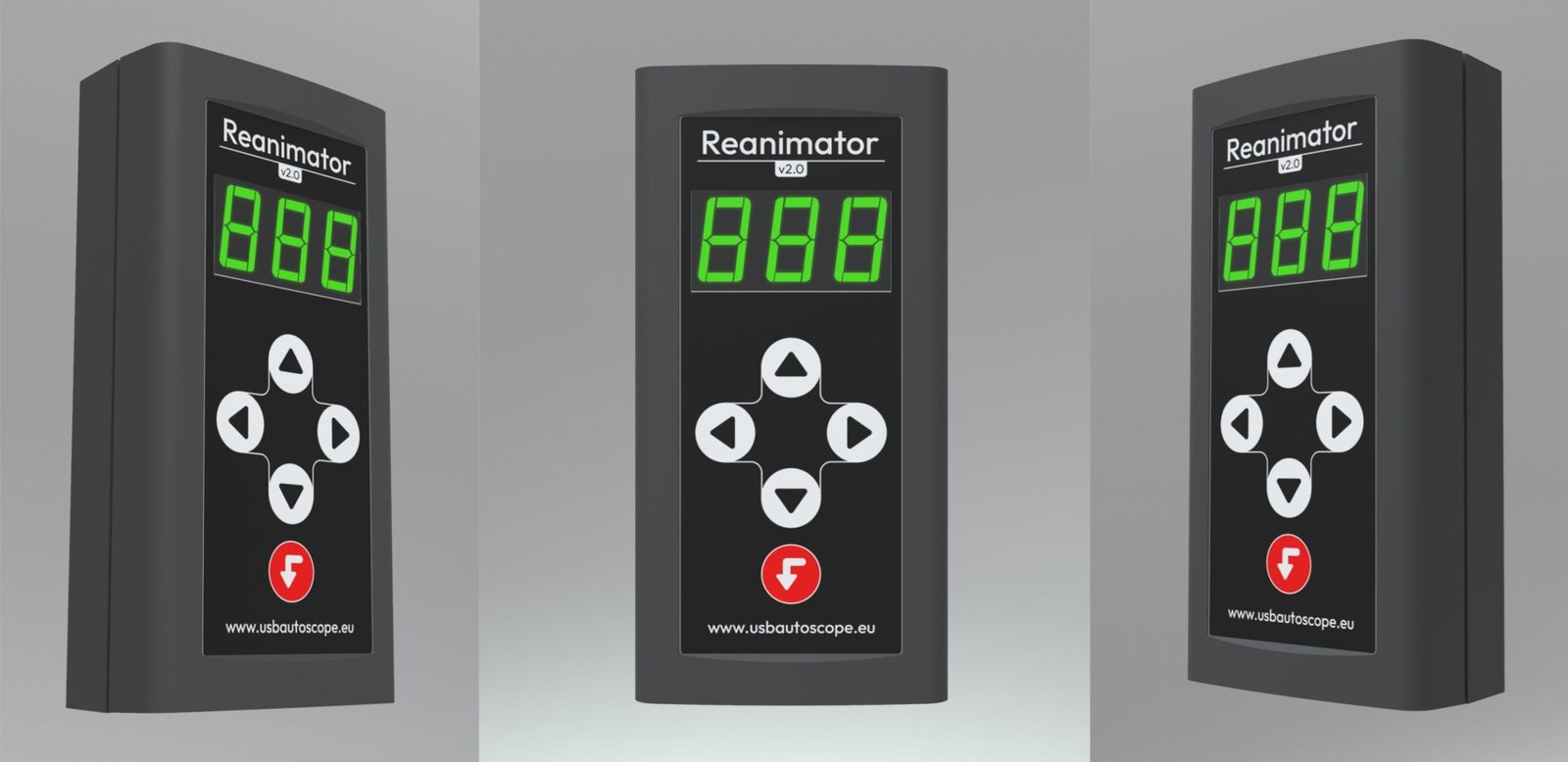
Injector Reanimator
Injector Reanimator device allows you to check the performance of injectors and then clean them using a special operating mode.
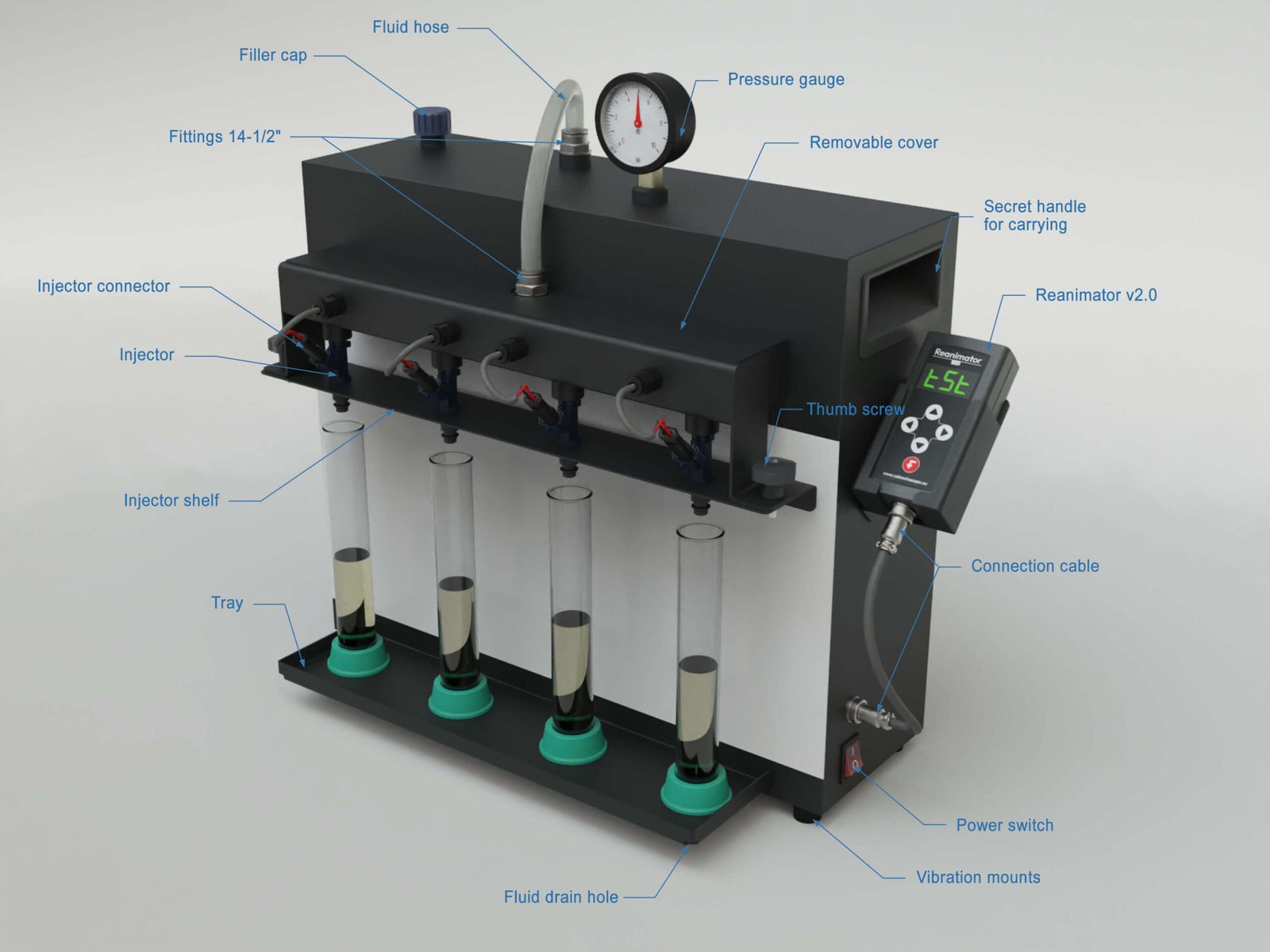
On this test bench Injector Reanimator is used as a control unit. It allows us to observe and check the injector performance.
We clean the injectors using a special WYNNS Injection System Purge, it is a cleaning product to remove dirt and deposits from gasoline injectors.
Injector Reanimator has two operating modes: Test and Cleaning.
In Test mode, the injector performance is tested. The injectors are supplied with identical control pulses (the windings of all injectors are connected in parallel) and fuel is supplied at a pressure of approximately 2.5 bar, which depends on the model of the pressure regulator used.
In Cleaning mode, the Injector Reanimator can only operate one injector! In this mode, the software automatically determines the resonant frequency of the injector needle. After "capturing" it, this frequency is deviated within a small range. In this mode, the BOSCH injector, immersed in the WYNN'S cleaning solution, begins to pump the cleaning fluid in the opposite direction. This promotes intense interaction between the chemical cleaner and the contaminants inside the injector.
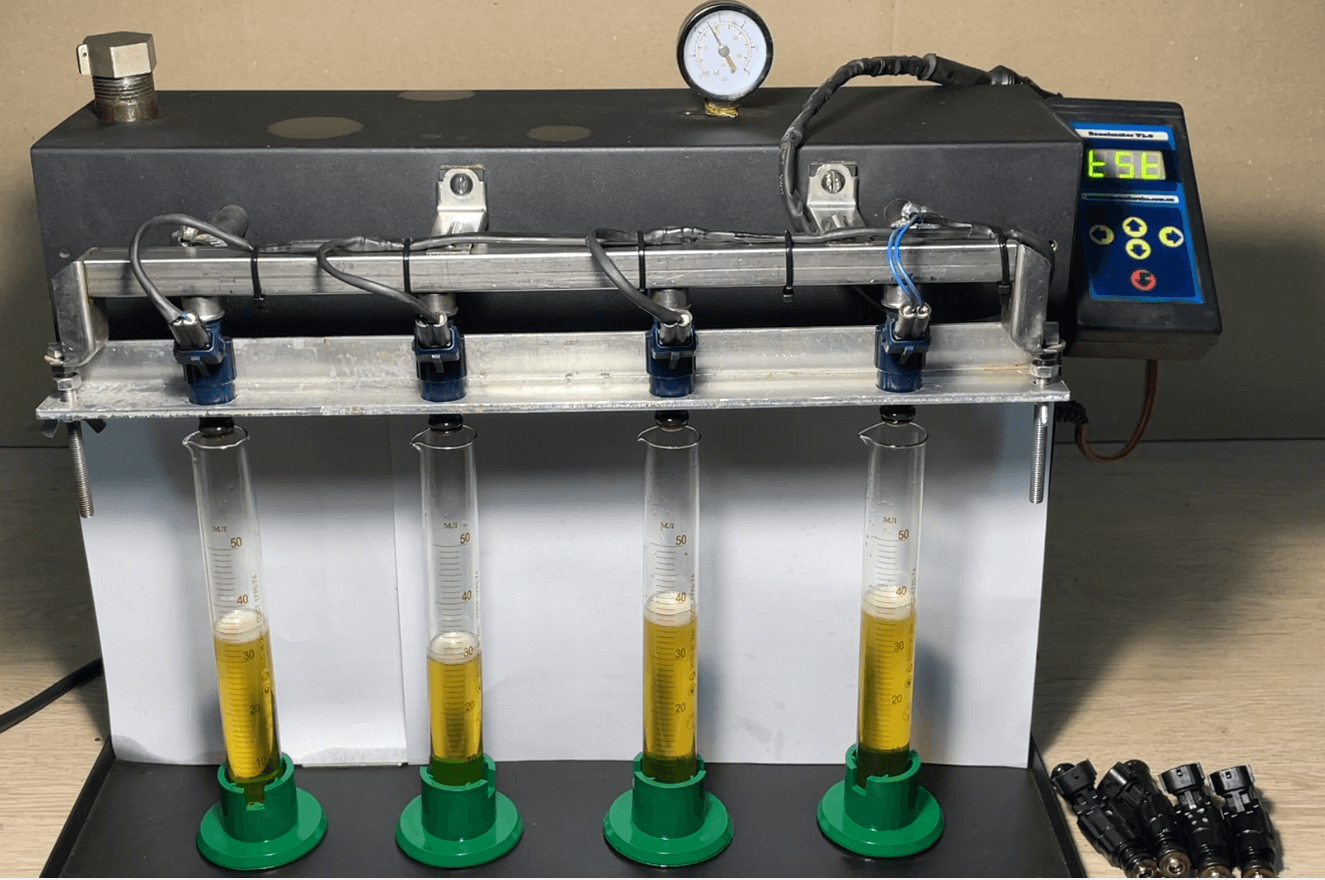
Testing mode
It's always been interested in watching how dirt is washed out of the injector in Cleaning mode.
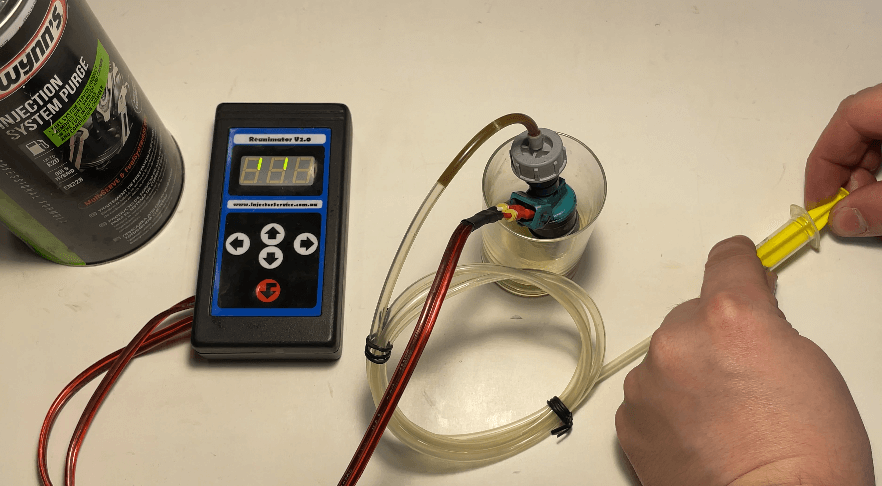
Cleaning mode
Cleaning can also be done using an ultrasonic bath and a special water solution.
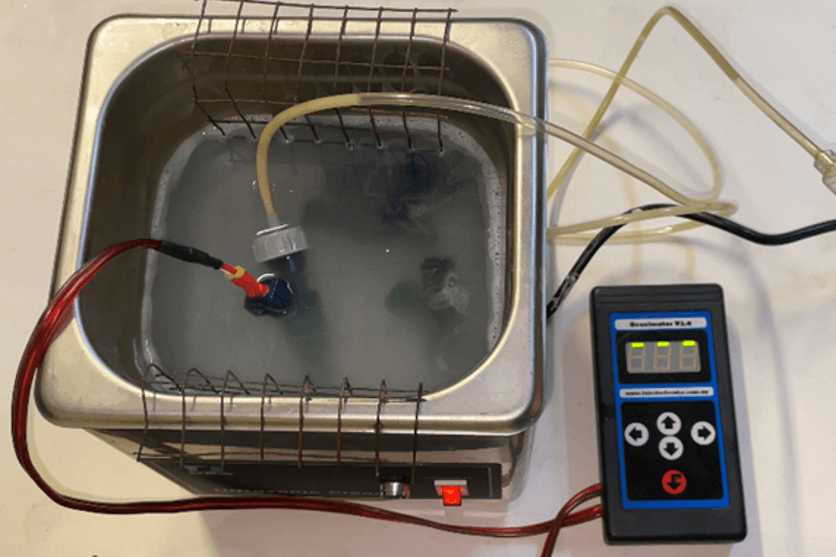
It's easy to monitor the cleaning process by checking the color of the fluid. Once it becomes clear, the process is complete.
After this, the injectors are reinstalled on the test bench and their performance is checked.
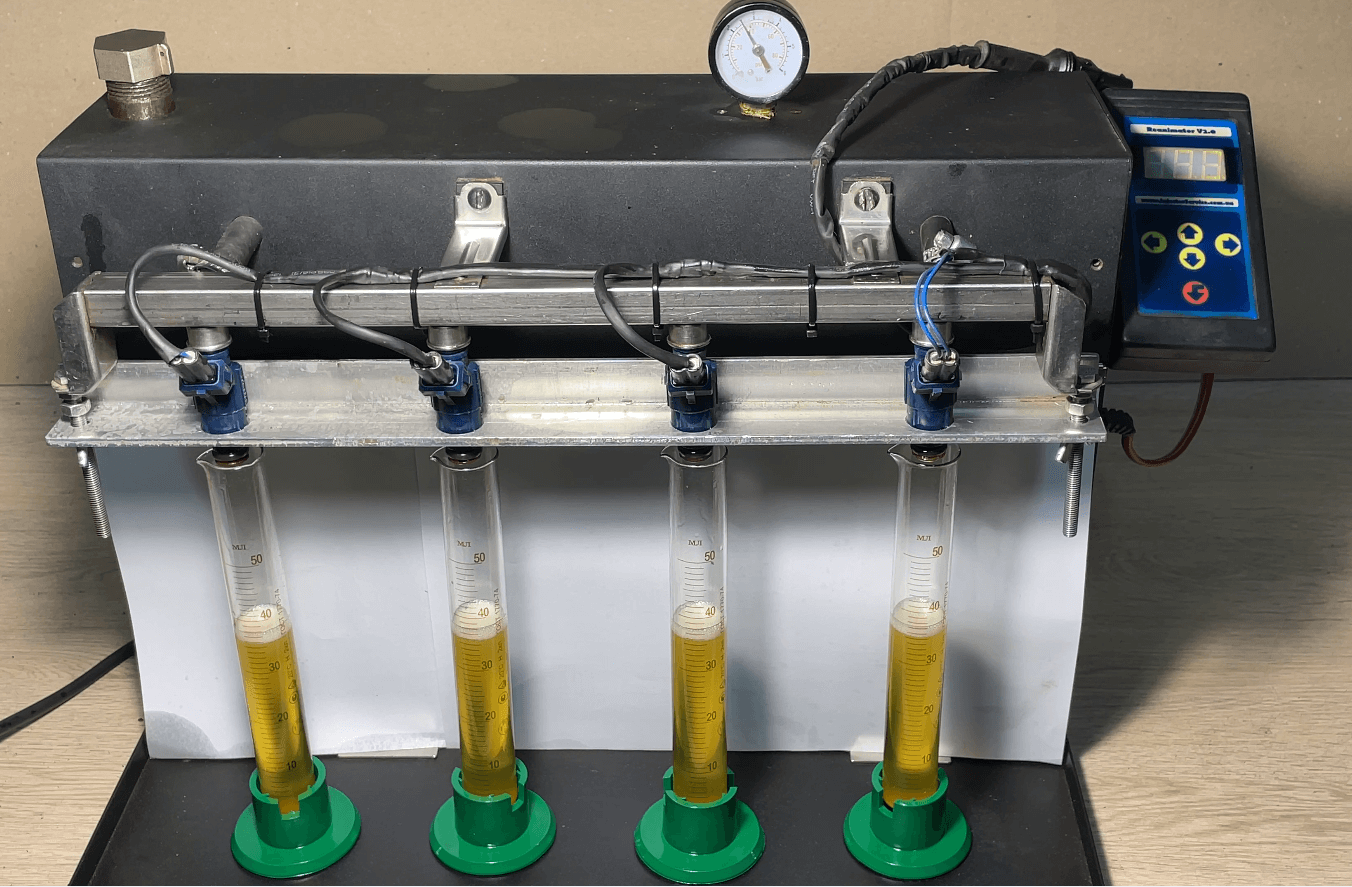
Re-checking cleaned injectors
Tightness (leak-proofness) of the cleaned injectors
There is one more point that very few people pay attention to.
It is the tightness (leak-proofness) of the cleaned injectors. It can be checked using a manual vacuum pump.
We test at maximum pressure. To check for leaks, the nozzle must be lubricated, for this we use regular shampoo as the lubricant.
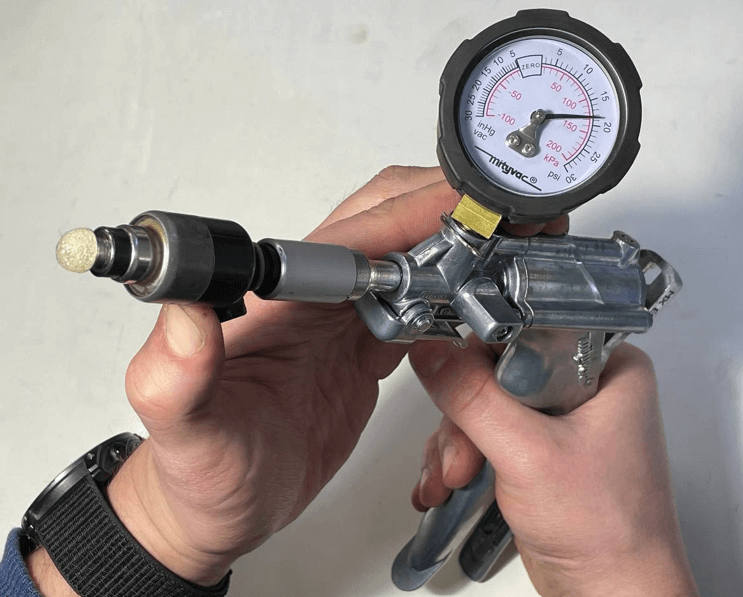
This is what leaky injectors look like
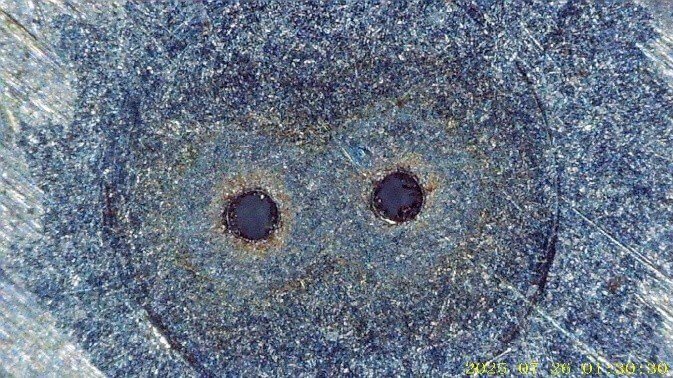
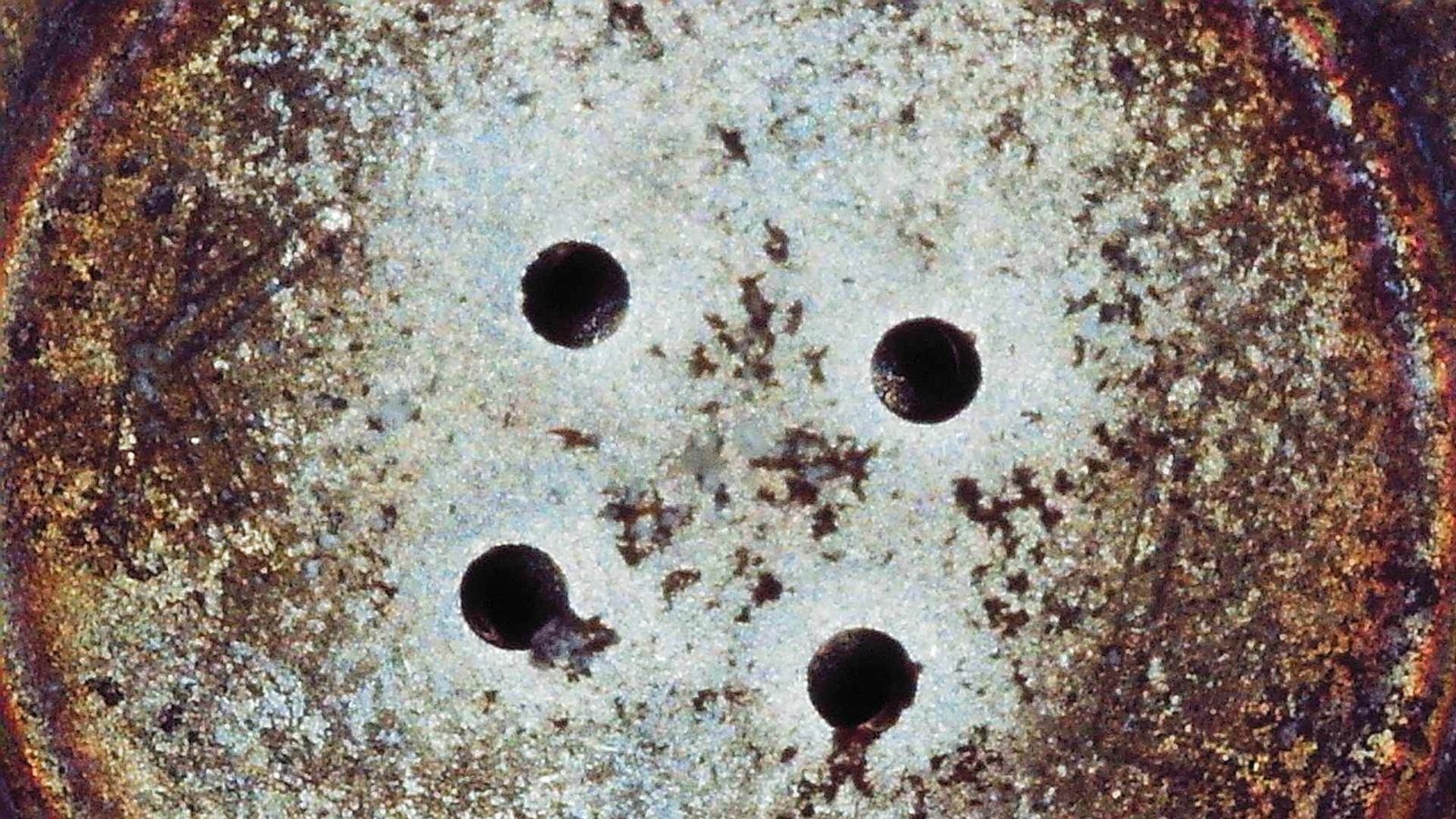
This injector must be replaced. The problem is that the seat under the needle is often worn, and in this case, the injector is not completely sealed.
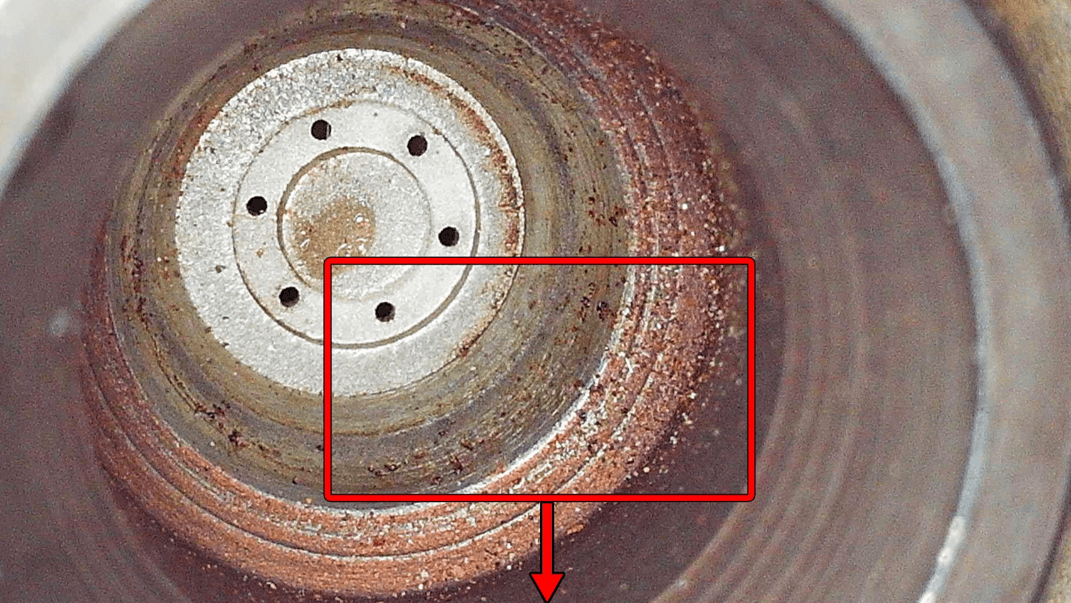
This is what a leaky injector seat looks like. It's full of pits and rust
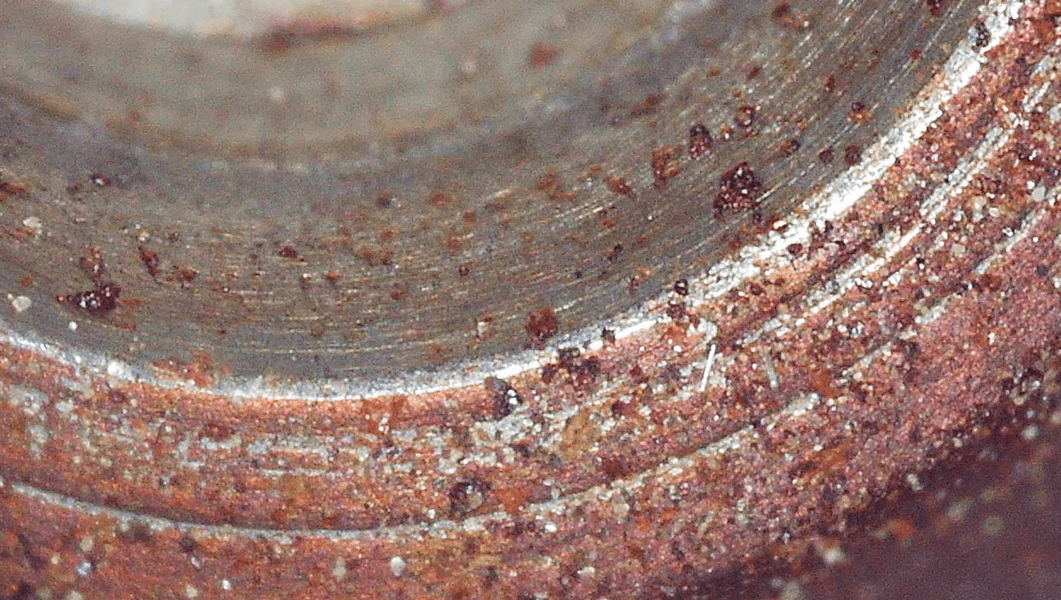
Fuel can enter the cylinder. When starting a hot engine, there will be no ignition. You need to wait until the engine cools down so that the excess fuel in the cylinder won't interfere with normal starting.
This injector must be replaced with new one.
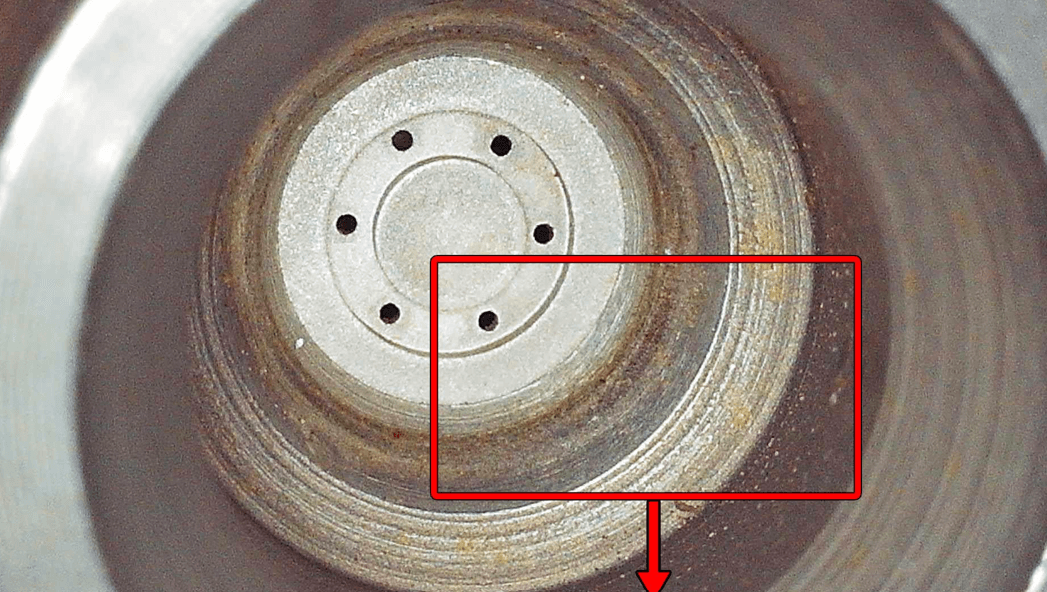
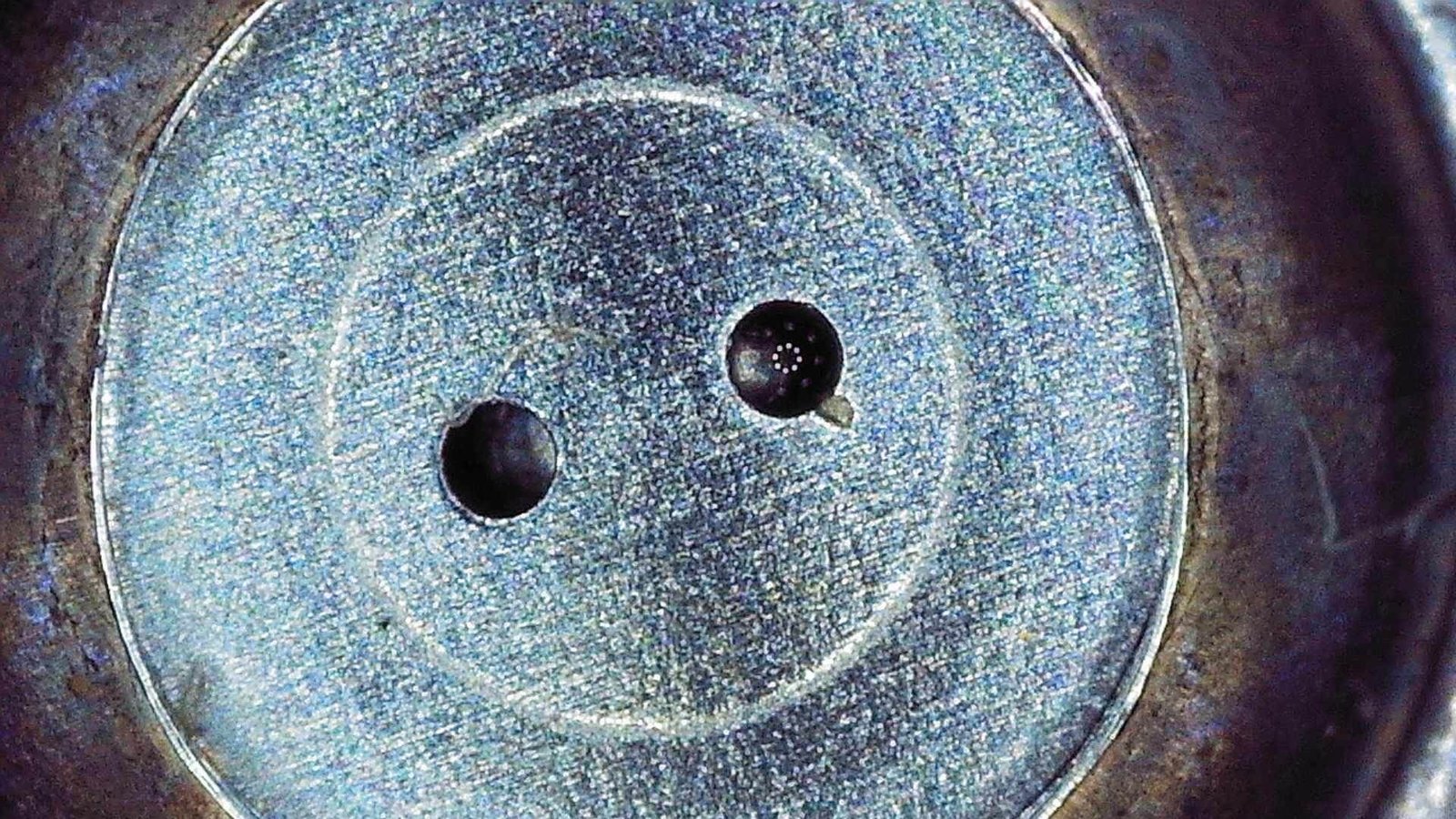
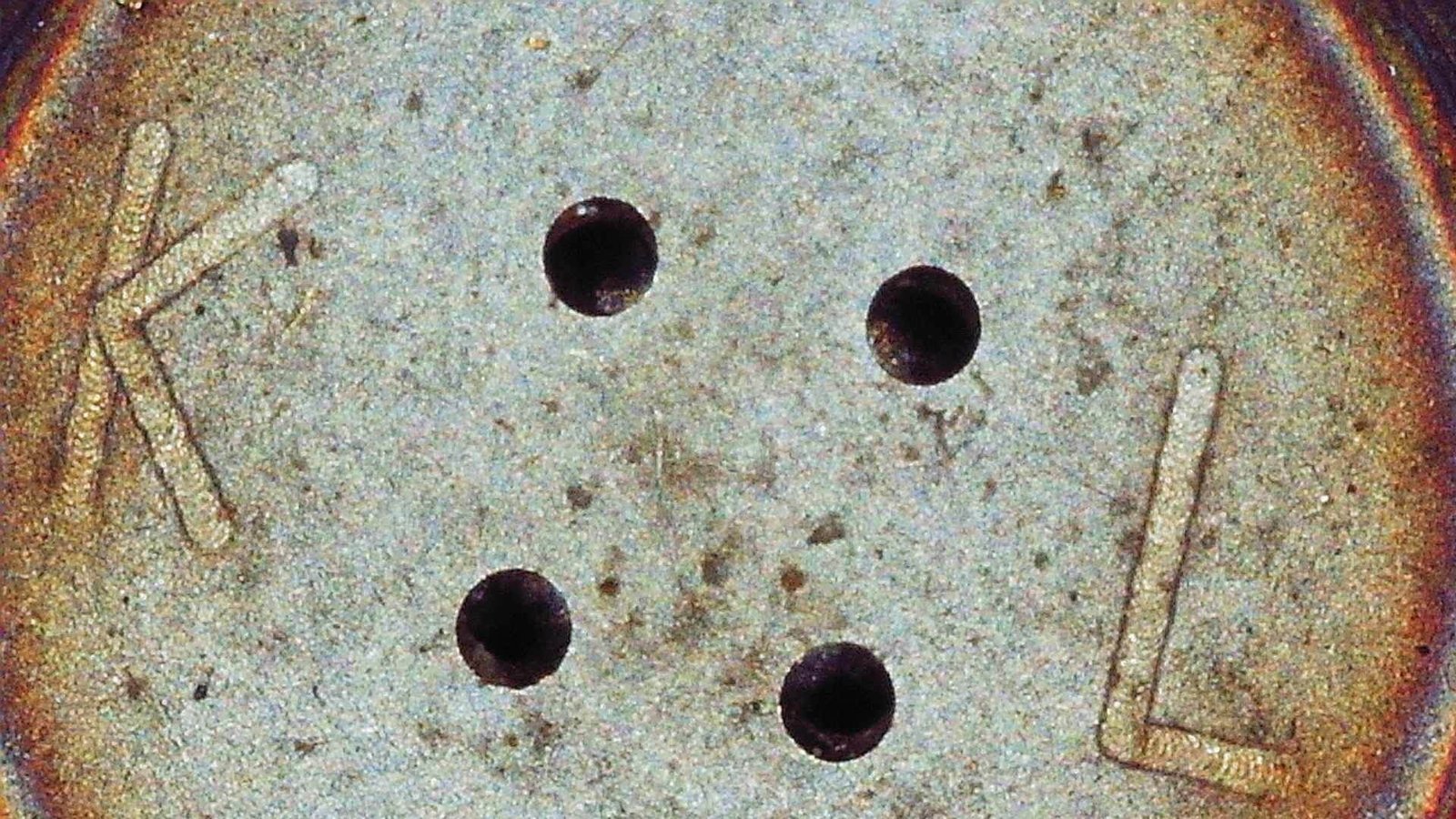
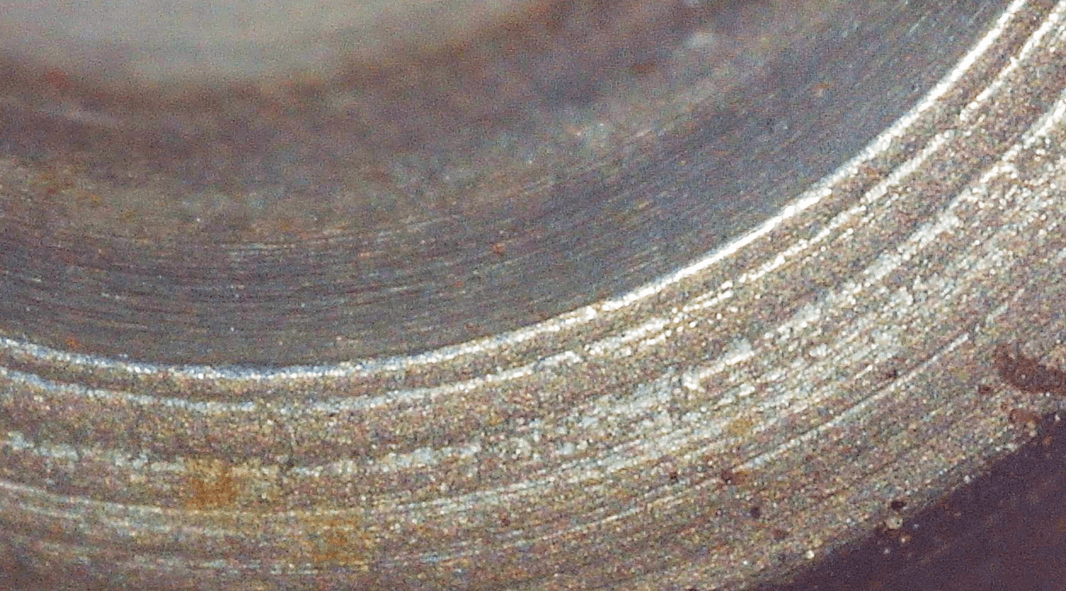
This is what the seat of the injector in a good condition looks like
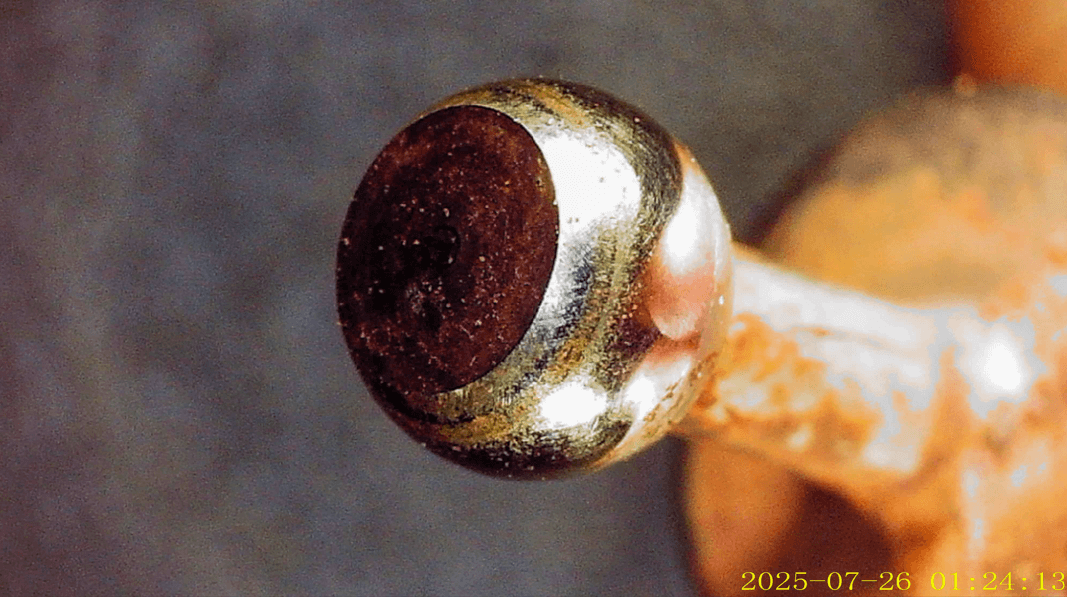
Needle valve of the injector in a good condition
Here's a video on checking and cleaning MPI fuel injectors: