
Passenger car diagnostics
Most scanners read error codes in a similar manner. However, reading diagnostic trouble codes (DTCs) is not diagnostic; it merely reads the data interpreted by the control unit, along with a brief description of the code's meaning.
The technician must determine whether the "diagnosis" provided by the control unit is correct and whether further testing and measurements are required. The preferred diagnostic method, in terms of time and cost, is to determine the cause of the malfunction with minimal or no disassembly of the system being diagnosed. Since there is always a possibility of misdiagnosis, it is recommended to use an alternative method of confirming the malfunction rather than relying on the control unit's readings.

1. Diagnostics with an oscilloscope and waveform analysis
Most internal combustion engines operate based on the same fundamental design and operating principles. Structurally, they share common components such as the crankshaft, connecting rods, pistons, valves, and related mechanisms. From an electrical standpoint, modern engines employ a similar architecture consisting of sensors, actuators, fuel injection systems, and ignition control circuits.
Due to this standardized design, diagnostic principles and analytical methods can be applied universally across different engine types, makes, and models.
The USB Autoscope system utilizes a modular diagnostic framework where analysis algorithms are encapsulated in dedicated files called scripts. Each script contains the necessary logic and signal processing procedures for specific waveform analyses, enabling accurate identification of various engine and system faults.
2. Modern ignition systems
DIS ignition system
Distributorless Ignition System was installed on cars mainly manufactured in the 1990s, and continues to be installed on some modern car engines. It features ignition coils with two high-voltage terminals.
Detailed information is available in this article
Coil-on-Plug ignition system
Most modern gasoline engines use individual ignition systems. This ignition system differs from conventional ignition and from the DIS ignition system in that each spark plug is served by its own (individual) ignition coil.
Detailed information is available in this article
3. Fuel injection system
There are several fuel injection methods: continuous fuel injection, point fuel injection, multipoint fuel injection, and direct fuel injection.
Continuous fuel injection is achieved by mechanical and electromechanical fuel injection systems. Other electronic fuel injection systems deliver fuel in precisely measured doses.
Detailed information is available in this article
4. Engine Management System
Almost all modern engines are equipped with a wide range of sensors.
These sensors provide continuous feedback to the engine control unit (ECU), which uses this data to manage engine start-up and regulate operating parameters throughout all driving conditions.
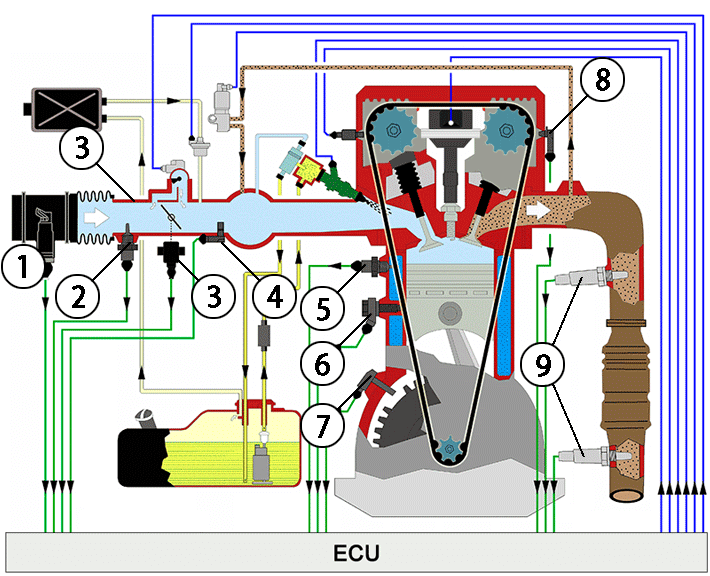
Figure 1. Engine Management System diagram
5. Synchronization of CKP and CMP signals
The CKP (Crankshaft Position Sensor) and CMP (Camshaft Position Sensor) signals are primary for the control unit.
If the signal is missing or distorted (for example, due to a defect in the trigger wheel), the control unit will not issue commands for fuel injection or the ignition system.
6. ElPower script
This script is designed to diagnose the vehicle's starting and electrical systems, as well as measure relative compression in engine cylinders. Allows you to check the performance and condition of the following vehicle components and systems:
- Battery
- Starter
- Relative compression in engine cylinders
- Alternator
7. CSS script
The CSS test is designed to detect misfires in internal combustion engine cylinders and identify their causes.
It was developed for diagnosing passenger cars and commercial vehicles with gasoline and diesel engines, gas and biofuel engines, and can also be used to diagnose other vehicles equipped with an internal combustion engine.
This test is simple and quick, and does not require disassembling the engine or its systems. It identifies misfiring cylinders and points to the source of the malfunction.
The CSS test allows you to:
- Compare dynamic compression in engine cylinders
- Check the ignition system's performance not only as a whole, but also in relation to a specific cylinder number
- Check the operation of the fuel injectors
- Check the operation of the ignition timing subsystem
- Identify defects in the crankshaft sensor timing disk
- Evaluate the crankshaft sensor signal level
- Conduct an in-depth signal analysis of any sensor or actuator related to the engine management system
8. Px script
The Px script checks key cylinder characteristics, intake and exhaust tracts, valve timing, and ignition timing.
The main purpose of the Px script is to test the engine's mechanical components and ensure the proper operation of its subsystems. The script operates by automatically analyzing the cylinder pressure graph, obtained using a sensor installed in the spark plug position.
Until recently, checking engine mechanics required a lot of time and attention.
Here is a partial list of the tests what Px script can perform:
- Valve timing
- Crankshaft and camshaft timing marks
- Intake and exhaust valve clearances
- Camshaft lobes wear
- Bearing runout
- Cylinder compression
- Intake and exhaust valve condition
Some of these procedures could be performed using a cylinder pressure sensor. The cylinder pressure graph contains information about the opening/closing moments of the intake/exhaust valves.
Below, we'll examine in detail the characteristic points and sections of the cylinder pressure graph without ignition during engine idling without load and during cranking.
https://injectorservice.com.ua/px_sensor
Autoscope technologies now fully automate this process with Px v3.24 script which checks key cylinder characteristics, intake and exhaust tracts, valve timing, and ignition timing system operation.